A useful design brief does not need to solve the house before design begins. It should explain how you live now, what is not working, what matters most, and what you want the project to make possible.
A simple checklist for the first conversation
- Who will use the home now, and what may change over time?
- Which three things must the project improve?
- What works well in the existing home or site and should be retained?
- What information do you already have: address, plans, survey, photographs or previous reports?
- What is your overall project allowance, and what have you included in it?
- Are there timing commitments, access needs or decisions already made?
You do not need every answer before getting in touch
Bring what you know and identify what is uncertain. We can use the first discussion to establish what information is needed next. Start with our project enquiry; suitable projects may then move to the detailed brief. The Void design process explains how the brief develops into a coordinated proposal.
Start with the life, not the floor plan
Think about daily routines, privacy, entertaining, storage, work, children, guests, outdoor living and future needs. Priorities are more useful than a long list of rooms.
Bring the practical information
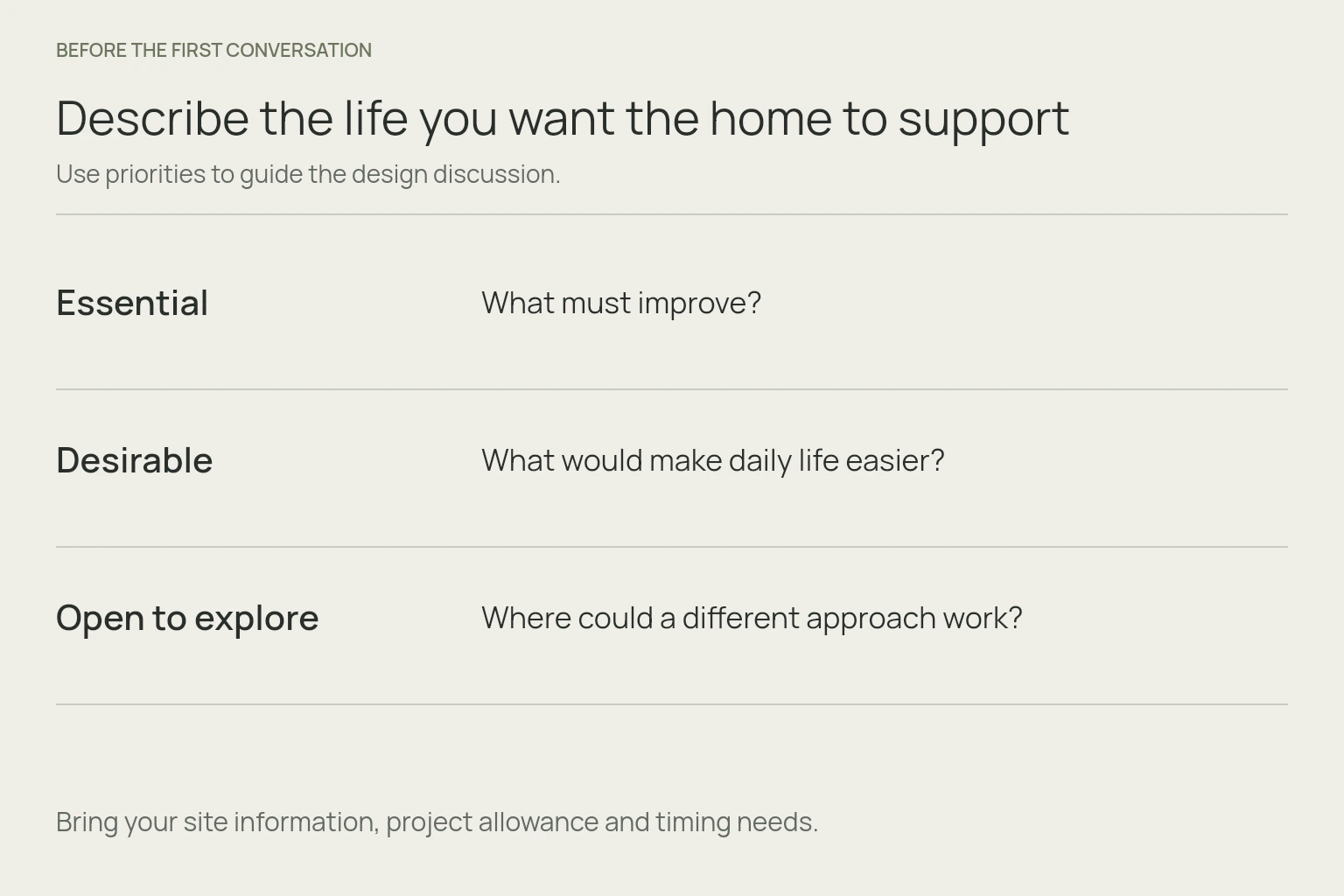
Site information, budget expectations, timing, known planning constraints and any existing drawings help establish the starting point. It is also useful to identify decisions that are fixed and areas where you are open to alternatives.
Leave room for discovery
A good brief is a framework for design, not a finished answer. Strong outcomes often come from testing assumptions and finding better ways to satisfy the underlying need.
Turn preferences into useful design questions
A picture can show a material or a mood, but it rarely explains the life behind it. Add a sentence about what you respond to: the sheltered outdoor room, the quiet separation of bedrooms, or the way daylight reaches the centre of the home. This gives us something to work with beyond appearance.
For example, “a larger kitchen” might really mean space for two people to cook while children do homework nearby. That need could be met through a better arrangement, not necessarily a larger floor area. Tell us about the problem before settling on the solution.
Separate priorities from possibilities
Group your ideas into essential, desirable and open to exploration. An essential might be step-free access to the main living spaces. A desirable might be a separate guest room. An open question might be whether a study needs to be enclosed. This makes later trade-offs easier to discuss without losing sight of the original purpose.
Budget and timing should be discussed plainly. If your allowance includes landscaping, a pool, consultant fees or temporary accommodation, say so. A shared understanding of scope is more useful than two people using the same number to mean different things.