Choosing a building designer is about finding a good fit between your project and the way a studio works. The finished photographs matter, but so do the decisions behind them: how the home responds to its site, how the brief was understood and how the design was communicated to the people building it.
Bring these questions to the first meeting
- How would you begin understanding our site and priorities?
- Which decisions will we need to make, and when?
- How are scope and budget reviewed as the design develops?
- Who coordinates the other consultants?
- What information is included at each stage?
- How do you handle a change to the brief?
- Who develops the design and responds to our questions?
- What construction support is included in the agreed scope?
Look for reasoning, not just a recognisable style
When you look through a portfolio, ask what changes from one project to another. A coastal home, a suburban renovation and a hinterland site may call for different arrangements. A useful conversation explains those differences rather than applying the same response everywhere.
Choose a project you like and ask why its living spaces, outdoor areas or openings were placed where they are. You are listening for an ability to connect a design decision to a practical outcome. Our project collection is a starting point for that discussion.
Ask who you will work with
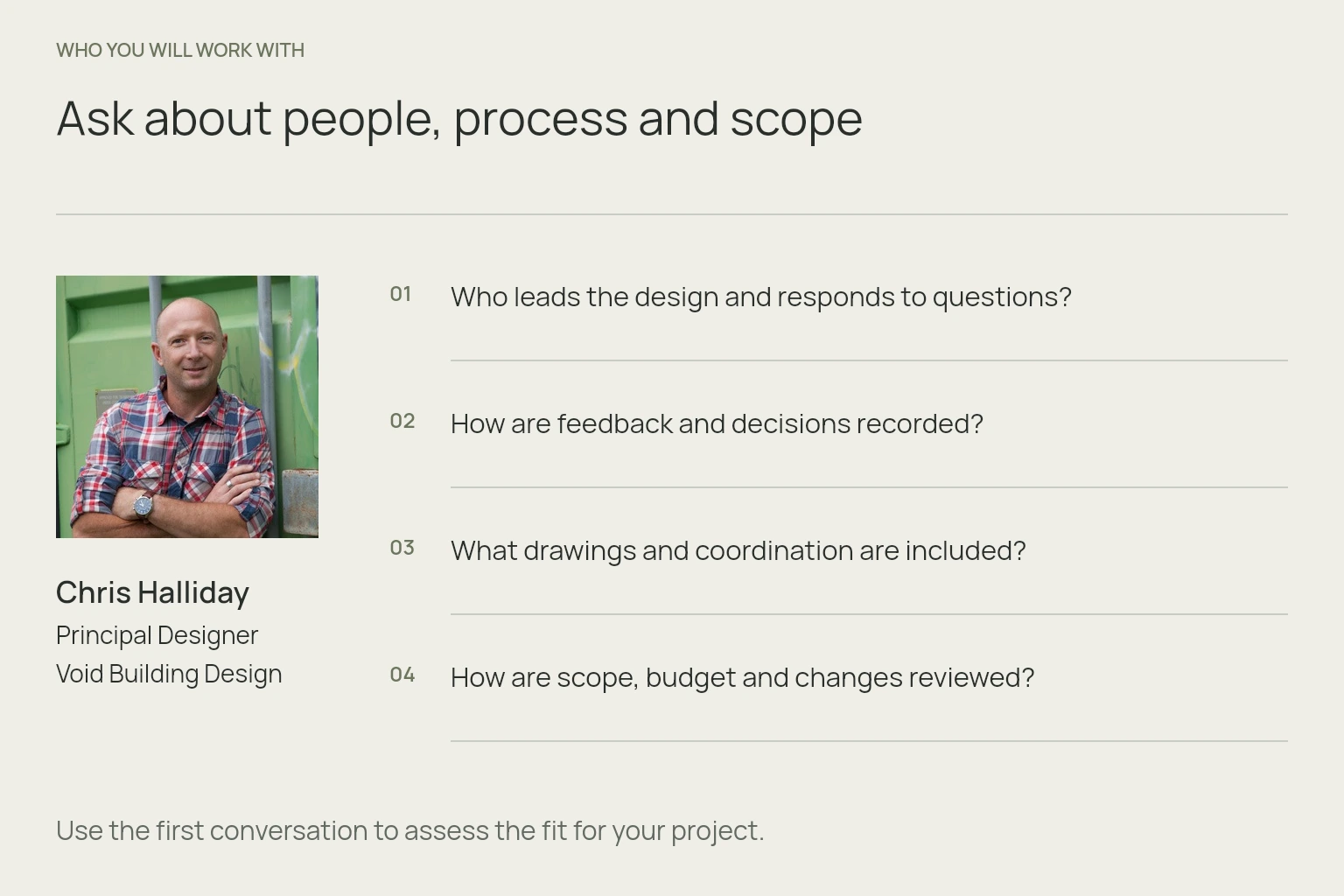
Understand who will lead the design, attend meetings and respond to questions as the work develops. Ask how feedback is gathered and how decisions are recorded. Clear communication becomes particularly useful when priorities compete or several people need to agree on a direction.
At Void Building Design, Chris Halliday is the principal designer and owner. Our Studio page explains his involvement and the approach behind the work.
Compare the scope before comparing a fee
Two proposals can describe different amounts of work. Check the stages included, expected drawing information, selections, consultant coordination and any involvement during construction. Ask what is excluded and how additional work or changes would be agreed. A clear scope helps you compare the service being offered.
Request an explanation of the construction documentation, not only examples of concept images. Understanding the intended level of detail will make later conversations about pricing and building more useful.
Make the first conversation specific
Bring the site address, what you hope to change and the practical boundaries you already know. You do not need a completed plan. A short design brief gives the discussion a useful starting point and helps both sides assess whether the project is a good fit.
If you are considering a new home or significant renovation, start a conversation with Void about the place, the priorities and the way you want to live.