
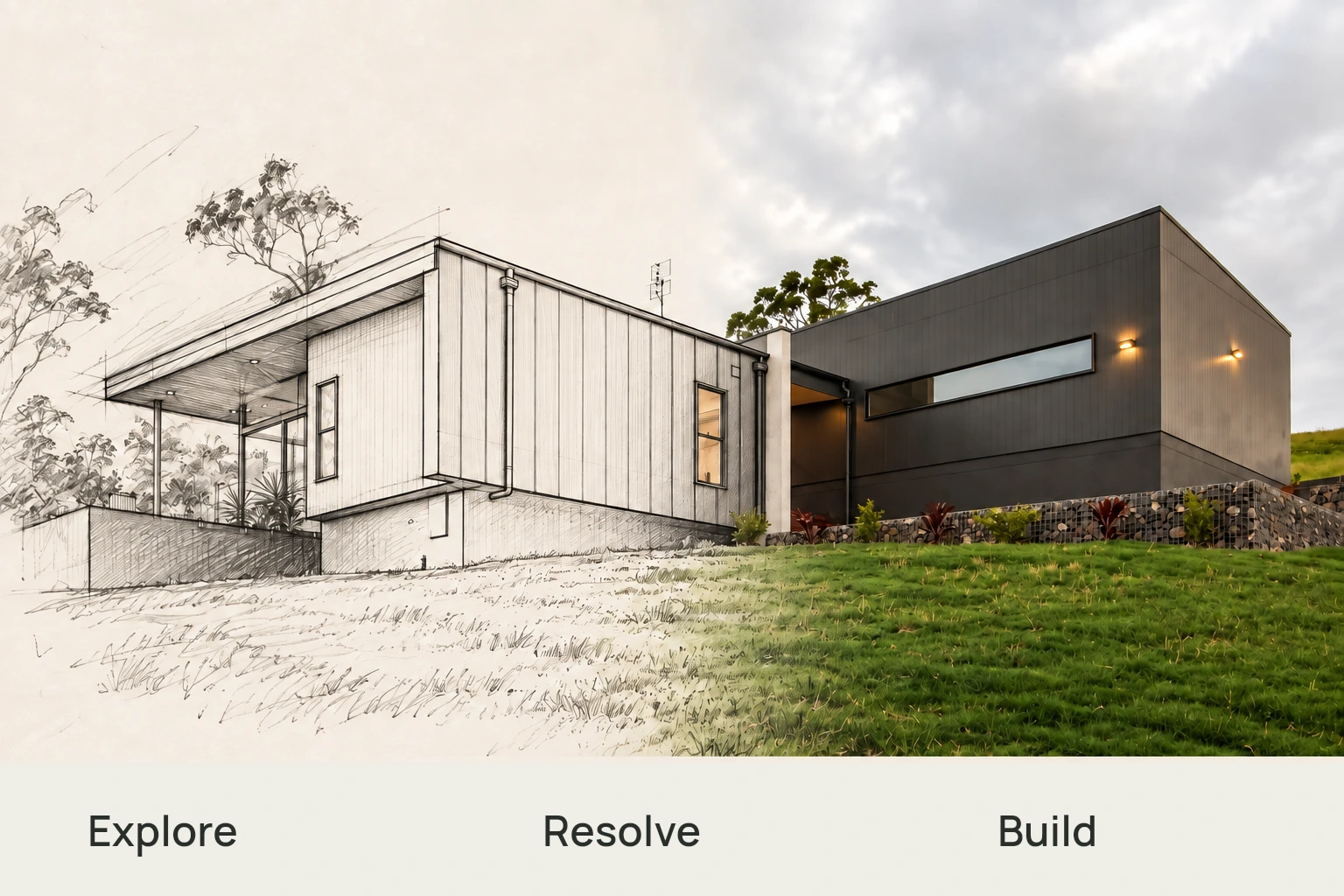
Residential design is a sequence of decisions. Some happen quickly. Others need time, consultant input, pricing or a pause while a client considers the options.
Prepare for each design conversation
- Identify your priorities and what the home needs to do.
- Gather the site information, plans and reports you already have.
- Collate feedback from everyone involved in making decisions.
- Confirm agreed decisions and identify what remains open.
For the seven stages, indicative timings and expected outputs, read the full Void design process. The sequence and timing vary with the site, scope, approvals and client decisions.
Early stages are deliberately exploratory
Site, brief, orientation, planning controls and possibilities are tested before a preferred direction is developed. This is where alternatives are most useful and least expensive to explore.
Feedback is part of the work
Design development is not simply drawing more detail. It is the process of testing the proposal against the brief, budget, site and technical requirements, then refining it as information becomes clearer.
Timing is a guide, not a promise
Approvals, consultant availability, design changes, pricing and client decisions can all change the pace of a project. A clear process creates structure without pretending every project will move at the same speed.
Give feedback against the brief
Before commenting on individual finishes, ask whether the proposal supports the daily life you described. Can guests arrive without crossing private areas? Is the outdoor space useful at the times you expect to use it? Does the arrangement allow quiet work alongside family activity? Specific feedback helps us understand why something needs to change.
Collect comments from the people making decisions and distinguish agreed priorities from unresolved preferences. A single coordinated response is easier to act on than several contradictory instructions. Where there is uncertainty, name it so options can be tested.
Agree what is ready before moving on
- Confirm the preferred layout and the reasons for choosing it.
- Review the relationship between the proposal, scope and budget.
- Identify consultant information still needed.
- Record selections or decisions that remain open and when they are required.
Expect more detail as uncertainty reduces
Early drawings help compare possibilities. Later information explains dimensions, materials and how parts of the home meet. Moving to detailed drawings before the main decisions are settled can create avoidable rework. Our guide to construction documentation explains the purpose of that additional detail.
A useful starting point is a clear residential design brief. You can also talk to Void about your project before you have every answer.